
.png)


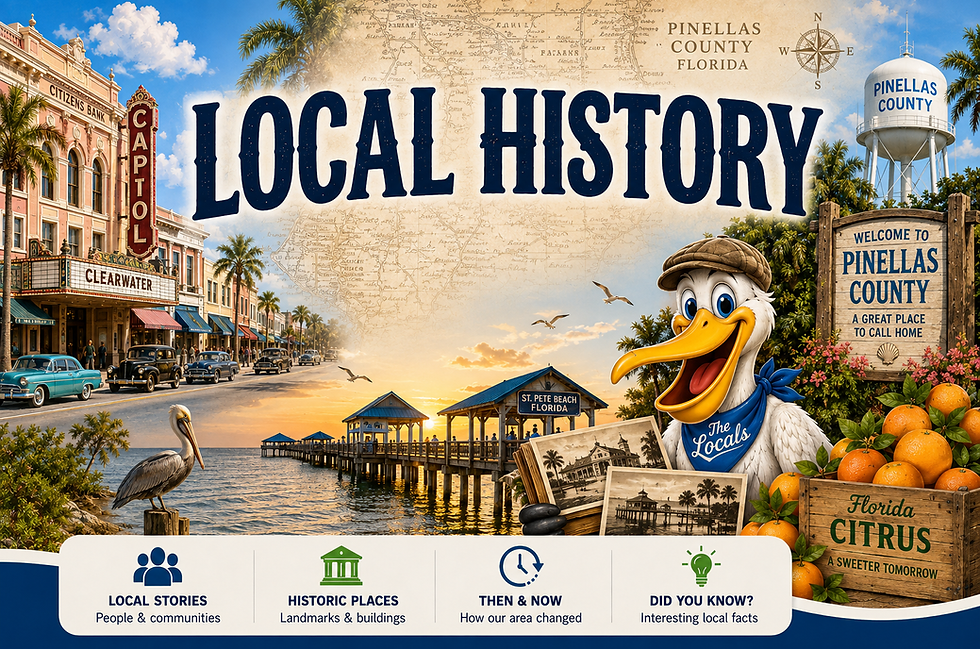


DISCOVER THE STORIES BEHIND THE PLACE WE CALL HOME
OF
PINELLAS COUNTY
%20(1).png)
From early settlements and railroads to thriving coastal communities, historic downtowns, Gulf beaches and the cities we know today—discover the people, places and events that helped shape Pinellas County, Florida.

EXPLORE THINGS TO DO
IN PINELLAS COUNTY
PINELLAS COUNTY
RESOURCES
Local History of Pinellas County, Florida
Discover the Stories Behind the Communities We Call Home

There’s more to Pinellas County than the beaches, businesses and neighborhoods we see today. Its history has been shaped by Native peoples, early settlers, pioneers, railroads, citrus farming, fishing, sponge diving, tourism and generations of families who helped turn small coastal settlements into the thriving communities we know today.
There’s more to our communities than the places, businesses and neighborhoods we see today. Pasco and Pinellas counties have histories shaped by Native peoples, early settlers, railroads, agriculture, fishing, sponge diving, tourism, development and generations of families who helped turn small settlements into the communities we know today.
The Locals is all about connecting people with the communities where they live, work and play—and we think knowing a little about where those communities came from is part of that connection.
Whether you’ve lived here your entire life, recently moved to the area, or simply enjoy discovering interesting pieces of local history, we invite you to explore the stories of Pasco and Pinellas County, Florida.
Explore Our
LOCAL HISTORY
History of Pinellas County, Florida
Pinellas County was established in 1912, but its story began long before the county had a name. Native peoples, early settlers, fishermen, citrus growers, railroad workers, entrepreneurs and generations of families all played a part in shaping the peninsula and the coastal communities that would eventually become Pinellas County.


Over the years, communities such as St. Petersburg, Clearwater, Tarpon Springs, Dunedin, Safety Harbor, Largo, Palm Harbor and the Gulf beach communities developed their own unique identities while becoming part of the larger story of Pinellas County.
Explore how Pinellas County got its name, how its early communities developed, the role railroads, citrus, fishing, sponge diving and tourism played in its growth, the historic landmarks that remain today, and some of the people and events that helped shape the county.
Before
Pinellas County
HAD A NAME
Long before Pinellas County was established, the peninsula that makes up the county today was home to Native peoples who lived along Florida's Gulf Coast for thousands of years. The area's bays, waterways, wetlands and Gulf waters provided access to fish, shellfish, wildlife and other natural resources that supported early communities.
Over time, Florida came under Spanish, British and eventually American control. As settlement expanded during the 1800s, families began establishing homesteads, farms, citrus groves and small coastal communities throughout the peninsula. Fishing and maritime trade also became important parts of local life as settlements grew in the area that would eventually become Pinellas County.


DID YOU KNOW?
Pinellas County was created in 1912, when the Pinellas Peninsula separated from Hillsborough County to become Florida’s 48th county.

The landscape looked very different from the Pinellas County we know today. Much of the peninsula was sparsely populated, with pine forests, palmettos, wetlands, citrus groves and stretches of undeveloped coastline. Small settlements were scattered throughout the area, and travel between communities often depended on rough roads, trails and waterways.

How
Pinellas County
GOT IT'S NAME

JANUARY 1, 1912
PINELLAS COUNTY IS OFFICIALLY ESTABLISHED
Pinellas County officially came into existence on January 1, 1912, when it separated from Hillsborough County and became Florida’s 48th county.
William L. Straub was a prominent St. Petersburg newspaper publisher and community leader who strongly advocated for separating the Pinellas Peninsula from Hillsborough County, helping pave the way for the creation of Pinellas County in 1912
At the time Pinellas County was created, choosing a county seat was an important decision. Clearwater ultimately became the county seat and developed into an important center for government, business and civic life in Pinellas County.
The Railroad
CHANGES
Pinellas County
In 1888, the Orange Belt Railway reached the Pinellas Peninsula, connecting communities to other parts of Florida and helping open the area to new residents, businesses and visitors.
Connecting the Coast
Rail service made it easier to move people, mail, supplies and locally grown products. It also gave visitors greater access to Pinellas County’s growing Gulf Coast communities.
Communities Grow Along the Tracks
Places such as Tarpon Springs, Dunedin, Clearwater and St. Petersburg benefited from improved rail connections. Businesses and neighborhoods developed as transportation became faster and more dependable.
Helping Shape Pinellas County
The railroad helped transform what had been relatively small, scattered communities into growing towns. Its influence became an important part of the development of the Pinellas Peninsula and the county that was officially established in 1912.


Farming, Ranching
HELP BUILD THE COMMUNITY
&
Citrus

Early settlers farmed portions of the Pinellas Peninsula, growing vegetables and other crops and raising livestock. Citrus became especially important, with orange and grapefruit groves once covering parts of the peninsula.
The arrival of railroads gave growers better access to markets, helping citrus and other agricultural products become an important part of the local economy.
As Pinellas County’s population grew during the twentieth century, many former groves and farms gradually gave way to homes, businesses and expanding communities.
GULF COAST
PINELLAS COUNTY'S
COMMUNITIES
While railroads and agriculture helped shape the Pinellas Peninsula, its Gulf Coast location played an especially important role in the development of its coastal communities.
Fishing, boating and access to the Gulf played an important role in shaping Pinellas County’s coastal communities. Places such as Tarpon Springs, Dunedin, Clearwater and St. Petersburg grew along or near the water, attracting residents, visitors and businesses while developing their own unique waterfront identities.


The Gulf of Mexico and the many bays, bayous and waterways surrounding the Pinellas Peninsula became especially important to the county’s coastal communities. Today, these waterways remain some of Pinellas County’s most recognizable natural features and continue to shape the area’s identity, recreation and way of life.
ST. PETERSBURG
CONNECTION
Hollywood
AND FLORIDA'S


St. Petersburg has one of Pinellas County’s most fascinating and unexpected chapters of local history.
During the 1920s Florida land boom, St. Petersburg and communities throughout Pinellas County experienced tremendous growth. Sunshine, beaches and waterfront living drew new residents and visitors from across the country, helping transform the peninsula into one of Florida’s most popular Gulf Coast destinations.
Pinellas County also developed a surprising connection to the motion-picture industry. In the early 1930s, Sun Haven Studios was established on Weedon Island, where filmmakers produced several movies and briefly hoped to turn the St. Petersburg area into a center for filmmaking in Florida.


Although Pinellas County never became a rival to Hollywood, its early connection to the film industry remains a fascinating and colorful chapter in the area’s history.
FROM RURAL COMMUNITIES TO A
Growing Suburban County
For much of its early history, Pinellas County was made up of small towns, farming communities, citrus groves and coastal settlements. That began changing dramatically during the second half of the twentieth century.
New roads, bridges, housing developments and businesses brought increasing numbers of residents to the peninsula. Communities including Clearwater, Largo, Pinellas Park, Palm Harbor and Seminole experienced significant development, while established cities such as St. Petersburg, Dunedin and Tarpon Springs continued to grow and evolve into the communities we know today.

The construction and expansion of major transportation routes—including U.S. 19, Interstate 275 and important bridges connecting the Pinellas Peninsula with the surrounding Tampa Bay region—made travel easier and helped fuel decades of residential and commercial growth.
As roads were widened and new connections were built, previously smaller communities became more accessible, encouraging the development of new neighborhoods, shopping areas, businesses and tourism throughout Pinellas County

Pinellas County Today
Today's Pinellas County is a combination of old and new.

Historic downtowns, longtime neighborhoods and reminders of Old Florida exist alongside modern waterfront communities, shopping districts, new development and the vibrant cities that make up Pinellas County today.


You can still find traces of the county’s past in historic buildings, old railroad routes, longtime neighborhoods, cemeteries, parks and landmarks scattered throughout Pinellas County.

And as the county continues to grow, its history continues to grow with it.
